
 16 July 2026
Difference between AC and DC cables and why is it necessary to use a dedicated DC cable in the solar system?
§2 § Introduction: The small detail that differentiates in securityMany people focus at the time of buying the solar system on panelsInverter and battery, and they forget a simple need in the form, but it is dangerous if a waiver is made in it: §5 § CablesThe cable that connects the panels and the inverter is not any ordinary wire, and this is not a luxury, this is a prerequisite for safety and the longevity of the system.
In this article, we will explain the difference between AC and DC cables simply, and why the DC cable that connects the panelsInverter must be a dedicated and approved type.
11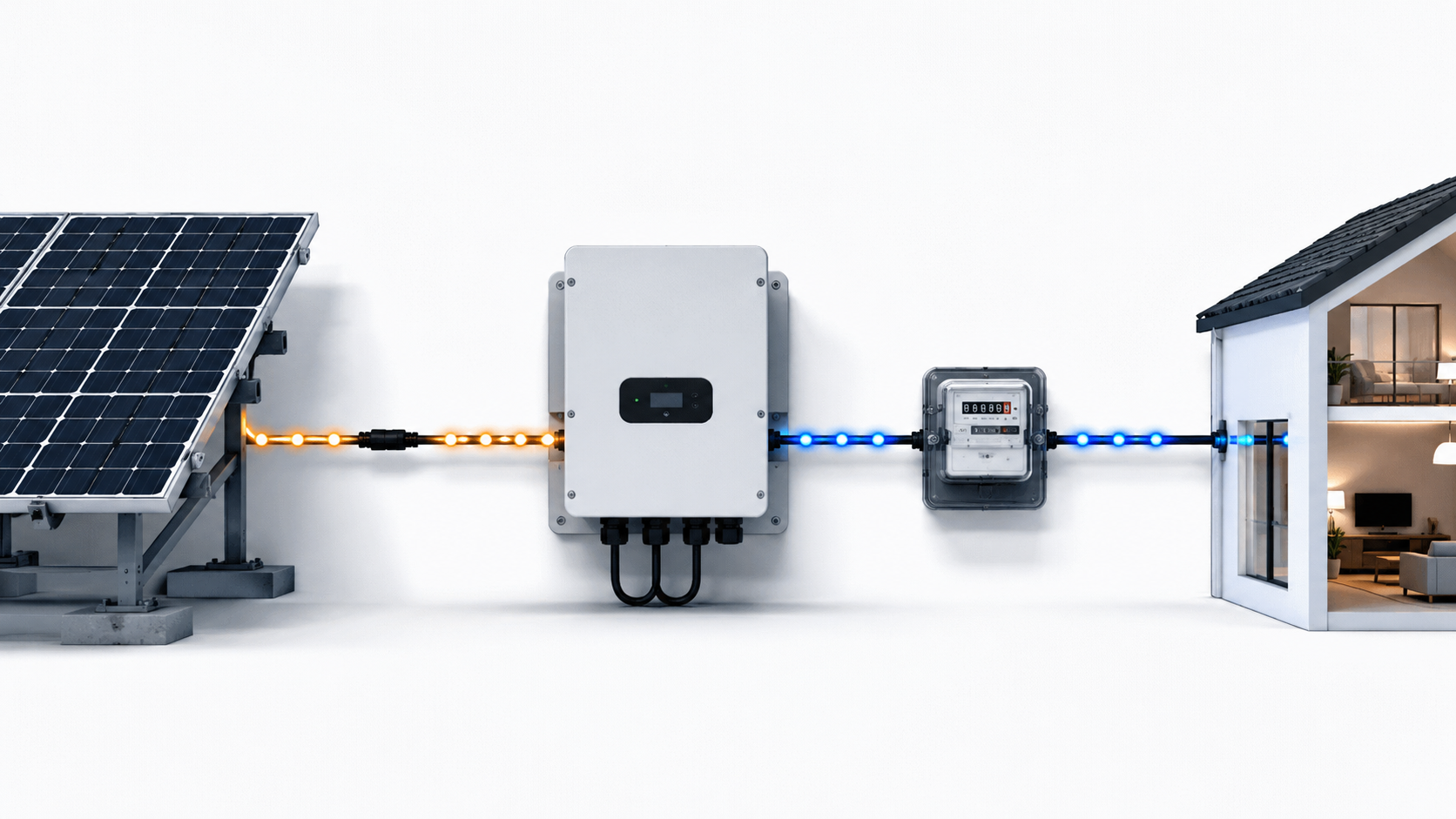
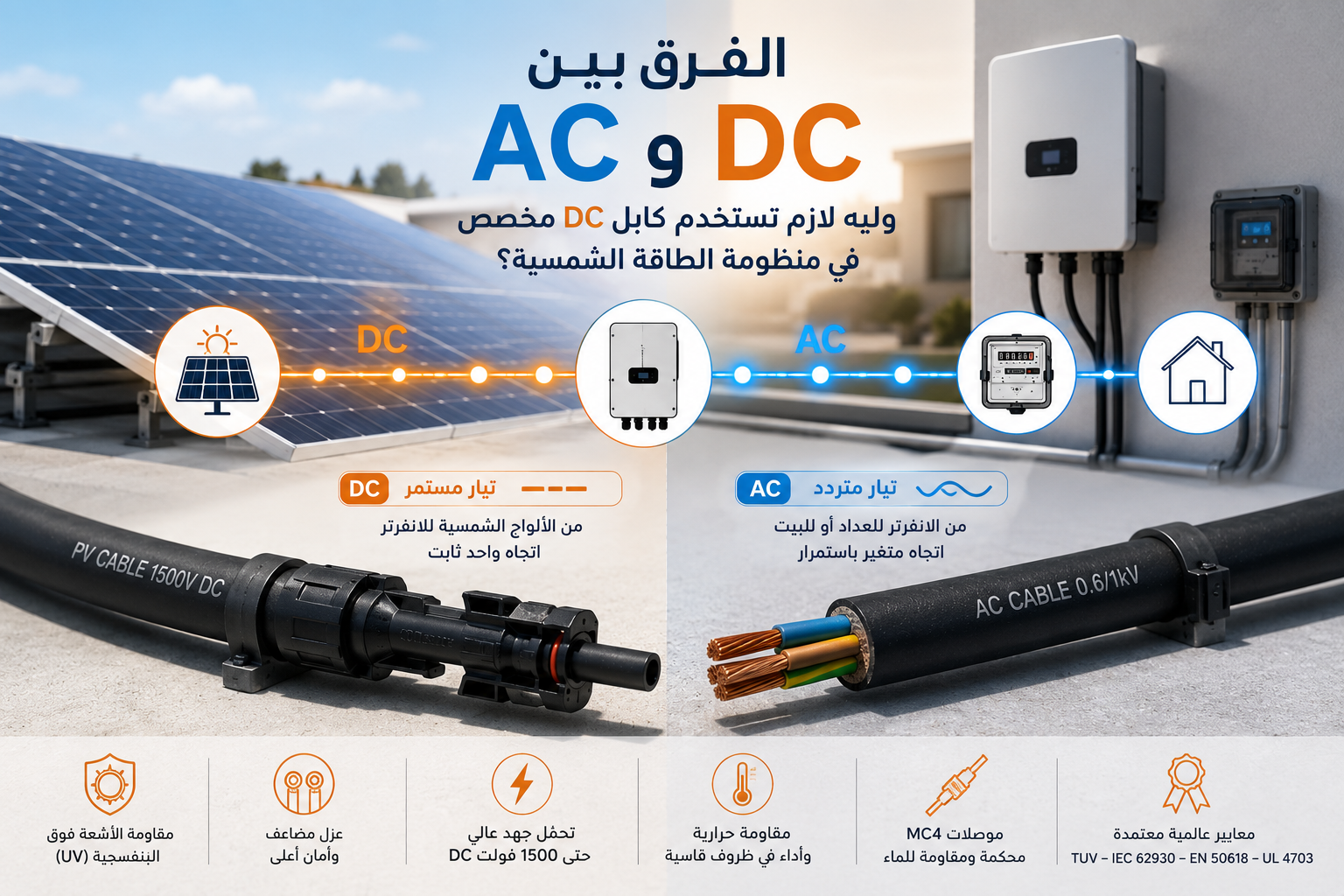
The basic difference between AC current and DC current
-
§18 § AC (Alternating Current): Is the current that comes from the public electricity gridAfter the transfer, the inverter will turn on your devices at home. Its direction is constantly changing.
22 UV Resistance(UV): This cable will be in direct sunlight on the roof for 25 years or more, and ordinary wires will quickly break under direct sunlight.§40 § § 41 § 42
44 § Double Insulation: Two layers Insulation allowanceOne layer, this reduces the likelihood of an electrical leak or spark.
47- 49§ Withstand higher voltage: Solar systems operate with sometimes high DC voltage (up to 1000 volts or up to 1500 volts), and this voltage is much higher thanThe voltage that ordinary house wires are designed to withstand.§52 54
Real Fire Hazard: Electrical arcs in DC circuits are much more difficult to repair.The extinguishing of the AC spark, because the DC current is not at zero as AC. If there is a contact in a wire that is not designed to have it, the risk is much higher.
- 107§ Loss of electricity and overheating: Wire of a size or type other thanIt is suitable for causing higher resistance, which means that part of the electricity is lost as heat instead of the inverter, which reduces the efficiency of the whole system and raises the risk of overheating.§110 § § 111 § 112
114§Nullity of the guarantee: Most manufacturerspanels and inverters refuse to activate the warranty if they discover that the connections are not with certified solar cables.
§ 117 § § 118 § § 119 § § 120 § § 121 §123 § Disconnecting AC cables from DC cables in the extension
§125 § Universal rule (ex.IEC 60364-7-712) AC and DC cables do not lend themselves in the same duct or pipes without a spacer, because any contact between the two circuits can cause serious accidents and complicate any future maintenanceIt must have separate paths, or at least clear dividing barriers, with warning signs on the DC path indicating that it is always “under voltage” as the sun rises, even if the main breaker is locked. § 128How to choose the size of the cableCorrect?
Size selection (flat in square millimeters) depends on 3 factors:
§133 § 134 § §135 § Power of the current (amps) expected to pass through the cable. 139 § 140 § 141 § Length of the path From the panels to the inverter —The longer the distance, the larger the section you need to reduce the voltage loss (Voltage Drop). 146§ 146 -
160§Elsewedy Electric: One of the largest Egyptian companies in the manufacture of electrical cables of all kinds, with products dedicated to solar power cables internationally approved, and availablewith ease and strong after-sales service in the Egyptian market. § 162 § 163 § 164 § 165 § 166 § Leader Cable: A Chinese company that specializes entirely in solar cables and connectors (DC cables and MC4 connectors), and whose products are certified with TUV and UL certificatesand IEC, and connected to solar projects in more than 80 countries around the world.§168 § § 169 § 170 § § 171 § § 172 § Veichi: A world-renowned Chinese manufacturer of inverters and industrial motors, producing DC series power cablesSolar (SI series) with XLPE/XLPO insulation resistant to ultraviolet rays and high temperature.§174 § 175 § 176
178 § his: German company specialized in manufacturing Ready-to-plug cables and integrated connection systems for terminalsDomestic and commercial solar energy, with a focus on ease and speed of installation.
182
DC (Direct Current): The current that rises from the solar panels themselvesbatteries, and pessary in one direction fixed all the time.§26 § §27 § 28 §
Solar panels produce DC electricity, and the inverter converts it to AC so that you can turn on your devices or extend them to the network. means the path from the panel to the inverter beacon DC cable, and the path from the inverter to the meter or to the house beacon AC cable.§
§31 § Why is the DC cable for solar energy different from any ordinary power cord? §33 § The dedicated DC cable for solar energy(Sometimes called PV Cable or Solar Cable) It is specially designed to withstand very harsh conditions, which makes it completely different from the ordinary electrical wire you find in your home's wiring:56§ Thermal fluctuation resistance: Works in a wide temperature range, from the cold at night to the intense surface heat at noon, without insulation cracking orWeakens.
6062§ The insulation material used: Often XLPE (crosslinked polyethylene) It is a very strong material and resistant to heat and weather, unlike ordinary insulation in house wires.
6668§ Special conductors(MC4): DC cables with MC4 sealed and waterproof connectors, specially designed to securely connect panels to each other. § 70 § §71 § §72 § 73 § 74 § 75 § Important note: Global standards that must be met at the time of cable purchaseDC solar are certificates such as TUV, or conform to the standard of §79 § IEC 62930 § 80 § or EN 50618 (European), or UL 4703 (U.S.)These certificates guarantee that the cable is indeed tested and suitable for use in the sun for a long time.§85 § 86
87 § 88 § 89
91§E Which can happen if you use an ordinary wire instead of an approvedDC cable? § 92 § 93 § 9496§ Rapid damage to insulation: Direct sunlight and heat will break down regular insulation within months, a year, or two, instead of remaining intact for 25 years.
§148 § Expected operating temperature At the place where the cable is laid.§150 § § 151
184§KBE (KBE Elektrotechnik): A prestigious German company based in Berlin, one of the world's leading manufacturers of solar cables, with certificatesTriple-Approved (EN 50618, IEC 62930, TUV), and installed capacity exceeding 15 GW worldwide.
§187 § § 188 §190 §
Approximately how much do certified solar cables cost?
Many customers are surprised whyThey know that the cost of cables approved is a very small percentage of the total cost of installing the solar power plant, often not exceeding 2% to 3% of the full project budget (which includes panels, inverters, installation and permits). In a station that costs, say, 100,000 pounds, the difference between an approved cable and a regular, cheap wire can be only a few hundred pounds, in exchange for real protection of your entire investment from the risk of fire or loss of efficiency.
197§This is an essential part of anySerious quotation for the installation of a solar power plant in Egypt or Saudi Arabia — Always ask the supplier what type of cable is used in the quotation, and do not clearly comply with the offer of this specification.
201§Frequently asked questionsIs it possibleI use a normal power cord instead of a DC cable for solar energy to save? No, this is a real danger to the safety of the system and can cause a fire, and the manufacturer's guarantee for panels and inverters is also negatedThe difference in price is very small compared to the risk.
207§ Do all DC cables withstand the same temperature and voltage? No, you must ensure that the cable specifications (maximum voltage and temperature) conform to an approved standard such as IEC62930 or EN 50618 before purchase.§210 § 211 Who is responsible for choosing the correct cable size and type? The engineer or technician responsible for the design and installation of the system, and the customer must ensure that the supplier or contractor uses cablesApproved and written in the contract Type and specifications of the cable.