
 20 June 2026
Maintenance and Longevity: How to Keep Your Solar System Running for as Long as Possible
Many people think the most important thing is just "installing" the system and that's it. The truth is that regular maintenance is what makes the difference between a system that keeps delivering top efficiency for 25 years, and one whose efficiency drops quickly and needs parts replaced before its time.
In this article, we'll cover everything you need to know about maintaining panels and water heaters, common faults and how to avoid them, and what the warranty covers and doesn't cover.
1. Step-by-Step Solar Panel Maintenance Guide
Solar panels don't need complicated maintenance, but there are simple steps that, if followed regularly, will keep their efficiency at its best for as long as possible.
Step One: Regular Cleaning
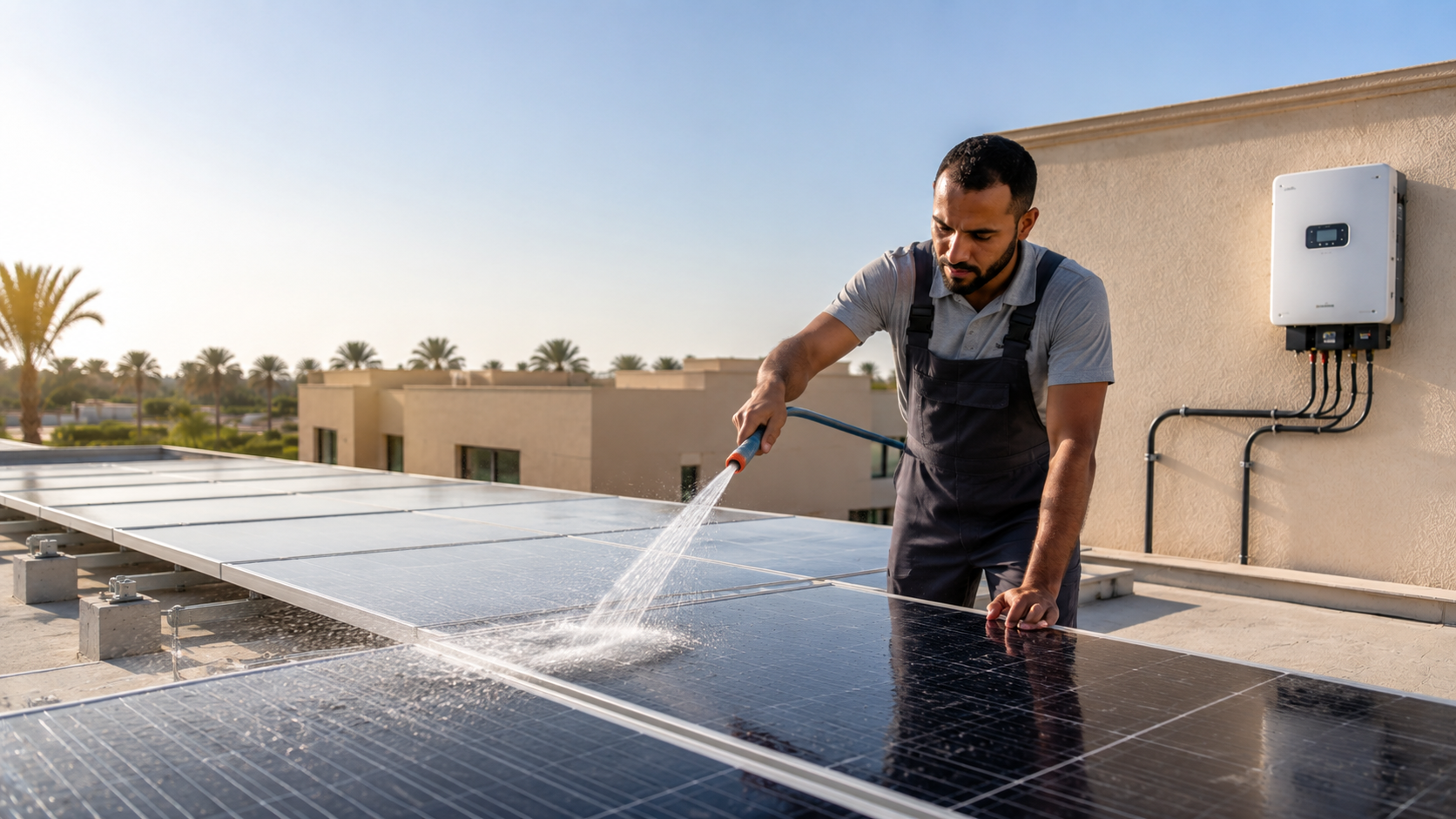
Dust and sand build up on the panel's surface and reduce the amount of light reaching the cells, which means less electricity. In Egypt, due to the climate and dust, it's best to clean the panels every one to two months, and you may need to clean more often during windy and sandstorm seasons.
Cleaning method:
- Use plain water and a soft cloth or a brush designed for panels
- Avoid using chemicals or strong detergents, as they can damage the panel's protective coating
- Clean early in the morning or in cool weather, to avoid cracking the panel from a sudden temperature shock with the water
Step Two: Inspect the Cables and Connections
Every so often, a specialist should check that the cables are intact and free of any visible damage or exposed wires, especially after winter or any harsh weather conditions.
Step Three: Check the Mounting Angles and Frames
The mounts holding the panels in place need to be checked to make sure they're stable and haven't been affected by wind or rust, especially in areas near the sea.
Step Four: Monitor Performance
Most modern inverters have an app or screen that shows the amount of electricity generated daily. If you notice an abnormal drop in output, that's a sign something needs to be checked.
Tip: Set up an annual maintenance schedule with a specialized company, rather than relying only on yourself for inspection, to make sure all the system's components are properly checked from a technical standpoint.
2. The Expected Lifespan of a Solar Panel and the Factors That Affect It
The expected lifespan of solar panels extends to more than 25 years, which is one of the main reasons they're considered a long-term investment. However, there are factors that can extend or shorten the panel's actual lifespan.
Factors That Extend a Panel's Life
- Correct installation from the start, at a suitable angle and height
- Regular, consistent maintenance and cleaning
- Using panels from brands known for high manufacturing quality
- Installing proper surge protection against voltage fluctuations
Factors That Shorten a Panel's Life
- Continuous exposure to dust and sand without regular cleaning
- Poor installation or using unsuitable mounts
- Excessive heat without adequate ventilation underneath the panel
- Physical impacts, such as objects falling on it or severe weather conditions (hail, strong storms)
Important note: A panel's expected lifespan means it continues operating at high efficiency, but efficiency gradually decreases over the years at a small, natural annual rate (called the Degradation Rate). This is normal and present in all solar panels worldwide, and it's already factored into the manufacturer's warranty.
3. Common Faults in Solar Energy Systems and How to Avoid Them
Like any electrical system, faults can happen, but most of them are avoidable with regular maintenance and proper monitoring.
1. Drop in Output Due to Dust
The most common issue and the easiest to fix. Solution: Regular cleaning according to the schedule mentioned above.
2. Problems in Connections and Cables
Can happen due to weather damage or rodents in some rural areas. Solution: Regular cable inspection, and using cables with dedicated insulation to prevent damage to the ends.
3. Inverter Faults
The inverter is one of the parts most prone to failure, since it's the most complex electrical component in the system. Solution: Choose a high-quality inverter from the start, and monitor performance regularly through its app or screen.
4. Partial Shading on the Panels
If a nearby tree or building casts shade over part of the panels, this noticeably reduces efficiency, and in some cases affects the whole panel, not just the shaded part. Solution: Study the site properly before installation, and use Half-Cut panels, which reduce the impact of partial shading.
5. Water Buildup or Rust on Metal Mounts
Especially in areas near the sea or during winter. Solution: Use mounts made of aluminum or rust-resistant metal, and inspect them regularly.
Summary: Most common faults are simple and avoidable with regular maintenance and basic attention, and the real problem usually comes from neglecting maintenance for long periods.
4. Maintaining Solar Water Heaters: What's Needed and When
Solar water heaters (for heating water) are a different system from electricity panels, but they also need regular maintenance to keep their efficiency.
Required Regular Maintenance
- Regularly clean the collector panels of dust, just like the electricity panels
- Inspect the tank to make sure there are no leaks or rust, especially in metal tanks
- Check the thermal insulation around the tank, since any damage to the insulation causes the tank to lose heat quickly and reduces heating efficiency
- Make sure the safety valves are working correctly, to avoid any pressure buildup inside the system
When Do You Need Immediate Maintenance?
- If you notice the water heating up more slowly than usual
- If there's a visible water leak around the tank or connections
- If you hear an unusual sound from the system during heating
Practical tip: For hotels and large residential buildings that use solar heaters intensively, it's best to have a regular maintenance contract with a specialized company, since heavy use requires more frequent inspections than typical household use.
5. The Warranty: What It Covers and What It Doesn't
The warranty is one of the most important things you need to understand well before installation, since it makes a big difference to your peace of mind in the long run.
There are usually two types of warranty:
Product Warranty
This covers manufacturing defects in the panel itself, and usually lasts 10 to 12 years depending on the manufacturer. If a fault occurs due to a manufacturing defect during this period, the panel is replaced or repaired free of charge.
Performance Warranty
This guarantees that the panel will maintain a certain percentage of its original efficiency over an extended period (usually 25 years), with a small, natural annual drop, and this is what makes solar panels a reliable long-term investment.
What the Warranty Usually Doesn't Cover
- Damage caused by poor installation from an unauthorized party
- Damage caused by external factors such as severe natural events (unusual storms, falling objects) in many cases
- Neglecting regular maintenance and cleaning, if proven to be the cause of declining efficiency
- Modifications or additional installations done without going back to the supplying company
Important tip: Before installation, request a detailed written warranty document, and ask clearly about the warranty duration for each component of the system (panels, inverter, battery if present), since each component usually has a different warranty period.
Article Summary
Regular maintenance and basic attention are what keep your solar system running for as long as possible, and reduce the chances of unexpected faults. Understanding the warranty details from the start saves you from unpleasant surprises if any fault occurs in the future.
Want to make sure your system is being properly monitored, or want to know the warranty details before installation? Contact us and we'll explain all the details and help you choose with confidence.