
 20 June 2026
System Comparisons: How to Choose What Suits You
Now that we've covered what solar energy is and how it works in the previous article, an important question comes up: "So which system should I choose? Which panels? Which inverter?"
In this article, we'll answer all of these questions in order, in a simple and uncomplicated way, so that by the time you're ready to decide, you understand everything before spending a single pound.
1. On-Grid vs Off-Grid: The Full Difference and Who Each One Suits
This is the first decision you'll make, because it shapes the entire system.
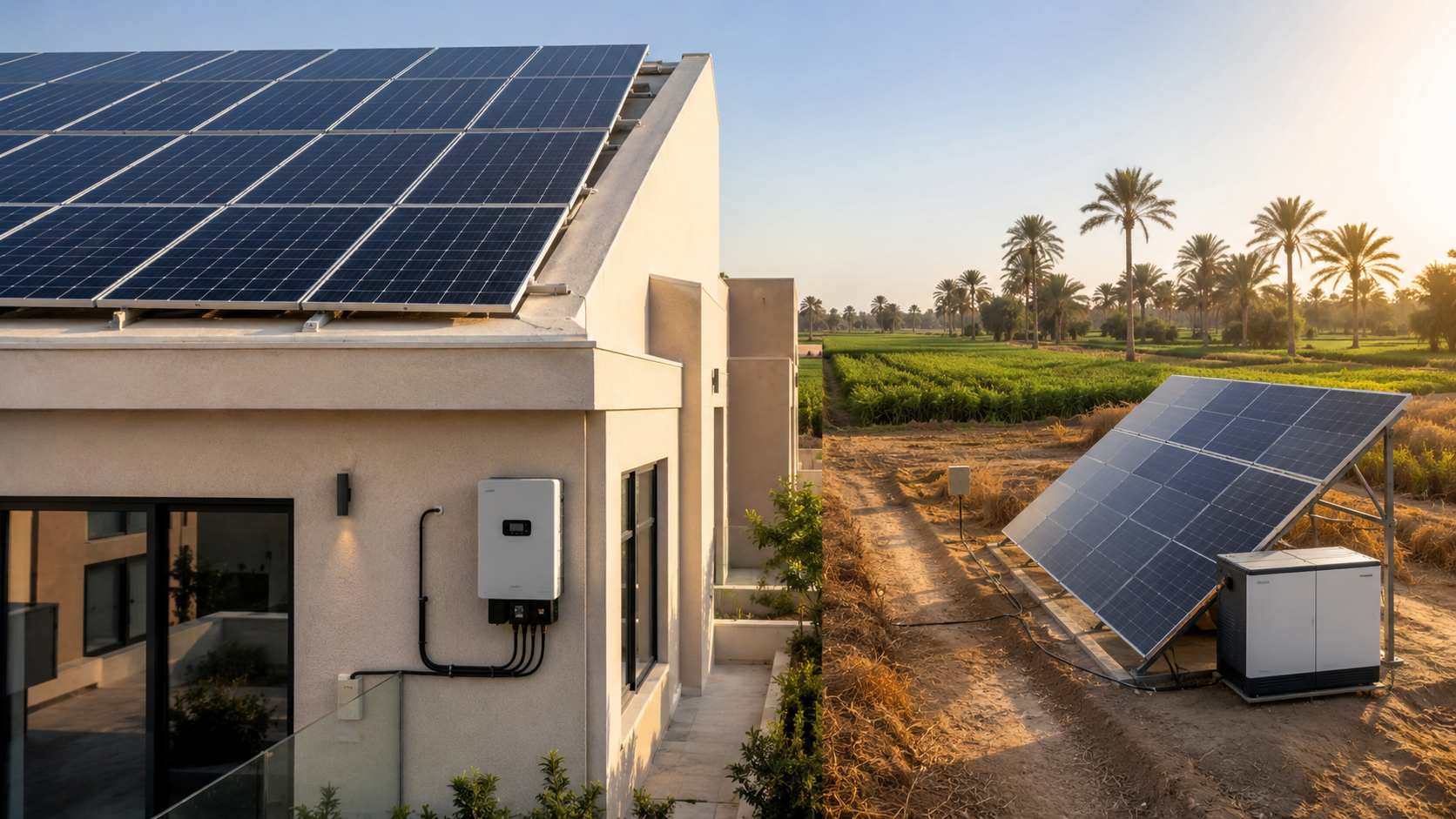
On-Grid System (Connected to the Grid)
This means the system works alongside grid electricity at the same time. The panels generate electricity throughout the day, and any surplus beyond your usage goes back to the public grid (in some systems, this is credited as a discount on your bill). At night or on cloudy days, you simply go back to using grid electricity normally.
Who is it suited for?
- Anyone with stable grid electricity and not much in the way of frequent outages
- Anyone whose main goal is reducing the bill, not full independence from the grid
- It's relatively cheaper, since it doesn't need batteries
Off-Grid System (Fully Independent)
This is a system completely separate from grid electricity. It relies on panels plus batteries to store electricity, meaning any electricity you use at night needs to have been stored during the day.
Who is it suited for?
- Remote locations with no grid electricity at all, such as some agricultural land and outlying areas
- Anyone who wants complete independence from the grid and doesn't want to be tied to it at all
- It's more expensive, since batteries add to the cost
Summary of the difference: On-Grid = more affordable and cheaper, but tied to grid electricity. Off-Grid = full independence, but more expensive due to the batteries.
2. Hybrid Systems: What They Are and When You Need One
Some people don't want to choose between the two systems — they want "both at once." This is where the Hybrid system comes in.
A Hybrid system combines the advantages of On-Grid and Off-Grid at the same time:
- Under normal conditions, the home runs on solar energy and saves on the electricity bill
- If there's a power outage, the battery kicks in automatically to power the home, without you noticing any difference
- If sunlight isn't enough (a cloudy day, for example), the system automatically draws from grid electricity
In short: it takes the best of both systems, and gives you a ready-made "backup plan" for any power outage.
When Do You Need a Hybrid System?
- If you experience frequent power outages in your area
- If you have critical appliances that must keep running (a refrigerator, medical equipment, work servers)
- If you want both bill savings and a guarantee that your home or business won't experience a "downtime" during power cuts
A Hybrid system costs more than On-Grid, but less than a full Off-Grid system, since its battery is usually smaller (it doesn't need to cover all your usage, just bridge the gap until the power comes back).
3. Solar Energy vs Traditional Electricity: A Numbers and Cost Comparison
The question that always comes up: "Does this actually save money, or is it just talk?"
Let's compare it simply:
Traditional Electricity
- A monthly bill that keeps rising over time, especially with periodic increases in electricity prices
- Exposed to outages and grid failures
- No "investment" — the money is spent and nothing comes back to you
Solar Energy
- A one-time installation cost, after which operation is nearly free (sunlight doesn't come with a bill)
- Panels last more than 25 years, meaning that after recovering the installation cost, the rest of the panel's lifespan is "pure savings"
- The payback period varies depending on the system size and your usage, but it generally ranges between two and four years, after which all the savings go straight into your pocket
- As electricity prices rise every year, the benefit of switching to solar energy increases over time
Comparison summary: Traditional electricity keeps taking money from you continuously, with nothing in return. Solar energy involves a one-time cost, followed by long-term savings that extend for years.
4. Types of Solar Panels (Mono / Poly / Half-Cut): The Difference and Which Suits You
Not all solar panels are the same. There are 3 main types you'll come across while shopping:
Monocrystalline Panels (Mono)
- Made entirely from pure, uniform silicon (a single continuous structure)
- The highest efficiency in converting light into electricity
- Take up less space to produce the same amount of electricity, which is useful if your space is limited
- Relatively higher in price
Polycrystalline Panels (Poly)
- Made from multiple silicon crystals fused together
- Slightly lower efficiency than Mono
- Need more space to produce the same amount of electricity
- Cheaper price, making them suitable if you have available space and want to save on installation cost
Half-Cut Panels
- Essentially Mono or Poly cells, but cut in half
- The main benefit: higher efficiency and lower losses, especially when there's partial shading on the panel
- Better performance in high temperatures, which matters a lot in a climate like Egypt's
- Widely used in modern projects because they combine efficiency with durability
Which One Suits You?
- Limited roof space and want the highest output → Monocrystalline or Half-Cut
- Plenty of available space and want to save on cost → Polycrystalline
- Want the best long-term performance in Egypt's heat → Half-Cut is usually the optimal choice
5. Choosing the Right Inverter: Practical Tips
The inverter is the "brain" that regulates the electricity coming out of the panels so your appliances can use it safely. Choosing the wrong one can affect the efficiency of the entire system, so keep these points in mind:
1. Determine the Right Capacity for Your Usage
The inverter's capacity needs to match your total electricity consumption and the capacity of the installed panels. An undersized inverter will reduce the system's efficiency, while an oversized one means extra cost with no real benefit.
2. Determine Your System Type First
An On-Grid inverter is different from an Off-Grid or Hybrid one. Each type works differently, so you need to know your system type before choosing the inverter.
3. Efficiency
A good inverter has a high efficiency rating (usually above 95%), meaning less energy lost during conversion.
4. Warranty and Service Life
The inverter's expected lifespan is usually shorter than that of the panels (10–15 years compared to 25 years for panels), so always ask about warranty length and the availability of spare parts and maintenance.
5. Manufacturer Reputation and After-Sales Support
An inverter from a well-known brand with strong technical support in Egypt will save you time and cost if anything goes wrong.
Final tip: Don't rely on price alone when choosing your inverter. A cheaper inverter can end up costing you much more in the long run if its efficiency is low or its after-sales service is weak.
Article Summary
Choosing the right system for you comes down to 3 simple questions:
- Do you have stable grid electricity? → On-Grid is more economical
- Do you want a guarantee and continuity during power outages? → Hybrid is the solution
- Is the location completely off the grid? → Off-Grid is the only option
Once you've determined the system, choosing the right panel type and inverter is what determines the system's long-term efficiency — and this is where technical expertise makes a real difference.
Want to know which system suits your home or business, and which panels and inverter will give you the best result at the most reasonable price? Contact us and we'll assess your needs and walk you through all the details.